
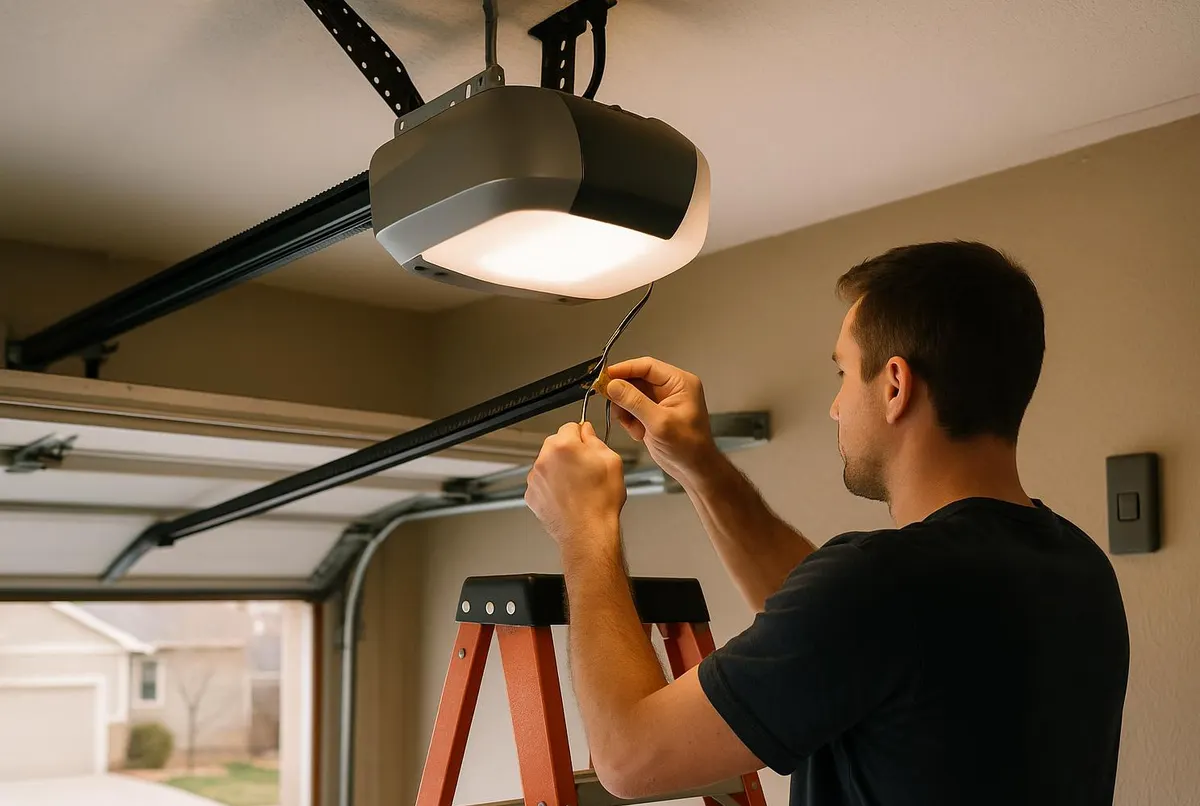
What a technician sees on these calls
Here's how it usually plays out: a homeowner orders a garage door online or picks one from a showroom, our technician shows up on install day with the door on the truck, and that's the moment someone remembers the neighborhood has an architectural review process. Or the garage faces an open field with nothing to break the wind, and the door that looked fine in the catalog isn't rated for that kind of exposure. Either way, what should have been a two-hour install turns into a phone call, a delay, and sometimes a return trip. Almost all of this is avoidable if the HOA question, the permit question, and the wind-rating question get answered before the door is ordered, not after.
HOA rules: what they actually control
If the property sits in a community with a homeowners association, there's a good chance the covenants say something about garage doors, even if nobody's read that section in years. HOAs typically care about things that are visible from the street: door color, panel style, whether windows or decorative hardware are allowed, and sometimes whether the door has to match others in the subdivision. Some associations require a written submission — a spec sheet or photo of the proposed door — before work starts, with approval coming from an architectural review committee rather than a quick yes from a neighbor.
The risk of skipping this step isn't just an annoyed HOA board. If a door goes in without approval and the association later says no, the homeowner can be on the hook for removing it and installing something compliant, on top of the first install. Before ordering, it's worth checking the actual governing documents or calling the HOA management contact directly, rather than going on what a neighbor remembers the rule being.
Permits: when they're actually needed
Not every garage door replacement triggers a permit, and whether one is required depends on the local jurisdiction and the scope of the work. As a general pattern, a straightforward swap — same size opening, same basic structure — is less likely to need a permit than work that changes the opening size, alters a structural header, or adds new electrical for an opener circuit. Garage conversions or anything touching the framing almost always need a permit.
Because requirements vary by town and can change, the only reliable answer is a quick call to the local building department before signing a contract. It takes a few minutes, and it's far better than finding out mid-project that inspection or paperwork is required. A reputable installer should be willing to have that conversation with the homeowner or help confirm what's needed for the specific address.
Wind-load codes: why they matter more here than people expect
This part of North Carolina doesn't get hit with the same coastal wind exposure as the coast, but it's not immune either. Remnants of tropical systems push through inland with heavy rain and sustained wind, and a garage door is one of the larger openings on most homes — if it fails under wind pressure, the whole structure can be compromised. Standard residential doors handle typical conditions fine, especially on interior lots with trees, fences, or neighboring houses acting as windbreaks. The bigger concern is garages with more open exposure: end-of-street lots, homes backing up to fields or cleared land, or corner properties with nothing blocking wind from one direction.
A wind-rated door has reinforced tracks, heavier-gauge panels, and stronger hardware designed to resist higher pressure without buckling. It's not something every home needs, but it's worth a real assessment of the garage's exposure rather than assuming either extreme — that nothing matters inland, or that every door needs to be storm-rated.
The trade-offs worth knowing before you argue about it
A wind-rated or reinforced door typically costs more than a standard one — figure a meaningfully higher price range for the door itself, as a general rule rather than a fixed number. There's also a hardware trade-off: a heavier, reinforced door needs springs and an opener sized to handle that extra weight. Putting a standard torsion spring or an underpowered opener on a heavier door leads to premature spring failure or an opener straining itself, which erases any safety benefit the upgraded door was supposed to add. Any installer recommending a wind-rated door should be speccing the springs and opener to match, not just swapping the door panel.
How to actually settle it
- Pull the HOA covenants or call the management contact for the approved style list and submission process
- Call the local building department to confirm whether a permit applies to this specific job
- Have someone assess the garage's actual wind exposure — not just guess based on the house next door
- Get HOA approval and permit status confirmed in writing before placing a custom door order, since production lead times can run several weeks
When to call Statesville Garage Door Experts
If there's disagreement about what the HOA will approve, whether a permit applies, or whether the garage needs a higher wind rating, that's exactly the kind of question worth asking before a door is ordered rather than after. Our Garage Door Installation service includes pulling the right spec sheet for an HOA submission and matching the door, springs, and opener to the home's actual exposure. If an existing door is already underperforming in storms or taking a beating from humidity and debris, our Preventive Maintenance visits catch wear on tracks, hinges, and hardware before it becomes a wind-load problem.
Give us a call before you place that order. We serve Statesville, Mooresville, Troutman, Harmony, Cool Springs, Olin, Turnersburg, and Hiddenite, and we'll help you get the HOA, permit, and wind-rating questions answered correctly the first time.